Flooring installation
- What we do
- LVP, hardwood and tile over a subfloor that is flat and sound.
- Materials
- Labor only. You choose and buy them, and we tell you what to order.
- Quote
- Free and in writing, after Iago sees the job.
- Where
- Around Charleston and Columbia, South Carolina.
A new floor is only as flat as the one under it.
Most flooring problems start below the floor. Plank joints that open, cracked tile and a floor that clicks underfoot have one usual cause. The subfloor was soft, loose or not flat. Nexus Build Works checks and fixes the subfloor first, then installs the floor you picked.
We install LVP, hardwood and tile, in one room or through the whole house. You buy the flooring and the underlayment, and we tell you how much to order, with waste for the cuts. We finish the edges with base or shoe molding and clean transitions at every doorway.
What we do
LVP and vinyl plank
- Old flooring removed down to the subfloor or the slab.
- Subfloor screwed down to stop squeaks, soft sections cut out and replaced.
- Low spots filled and high spots ground to the flatness the manufacturer calls for.
- Underlayment and plank installed with the expansion gap the product needs.
- Door casings undercut so the plank slides under them.
Hardwood
- Hardwood nailed or glued as the product calls for, over a sound, dry subfloor.
- The first row set to a straight line, not to a wall that is out of straight.
- Thresholds and transitions to the next floor.
Tile floors
- Backer board or an uncoupling membrane over the subfloor, as the tile system calls for.
- Layout from the center line of the room, so the cuts at both walls match.
- Tile set flat, grouted and sealed when the grout calls for it.
Trim and transitions
- Baseboard or shoe molding reinstalled or replaced.
- Transition strips at doorways and at changes in height.
- Stair treads and nosings where the floor meets a stair.
How we check the work
Flat before it is finished
We run a long straightedge across the floor and mark the high and low spots. Plank and tile go down only after the floor meets the manufacturer's flatness spec.
Moisture checked
Concrete slabs and subfloors over crawl spaces are checked for moisture before the floor goes down. Moisture ruins a floor from the bottom.
Room to move
Floating floors get the expansion gap the manufacturer asks for at every wall and doorway. A floor pinned at its edges buckles in summer humidity.
Straight lines
The first row is snapped to a chalk line. Walls are rarely straight, so they are never the reference.
Stiff enough for tile
Tile needs a stiff floor. We check the joists and the subfloor thickness before we quote tile on a framed floor.
Where the job needs a permit, the building department inspects it too, and its rules come first.
From Nexus job sites
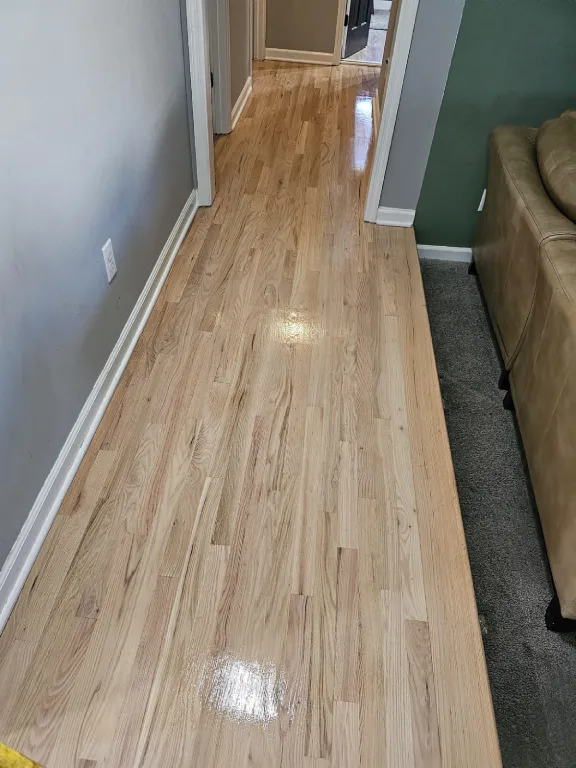
Oak hallway floor, sanded and finished. 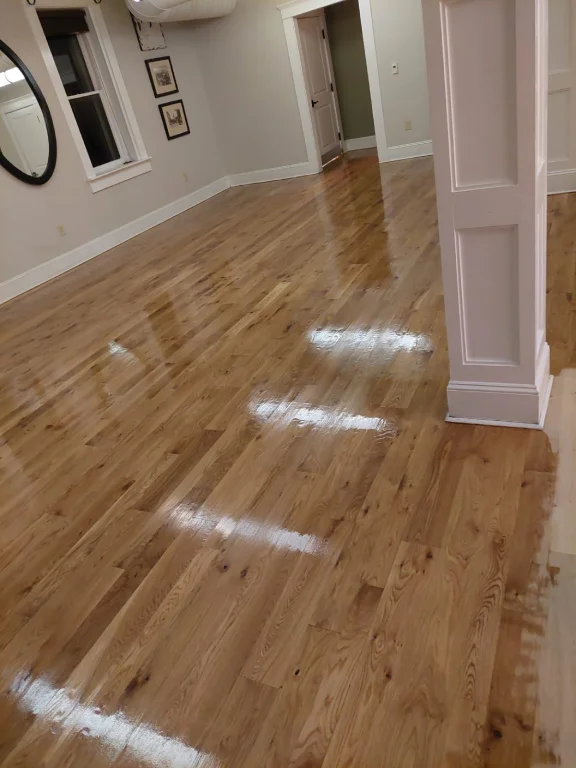
Oak floor finished around a paneled column. 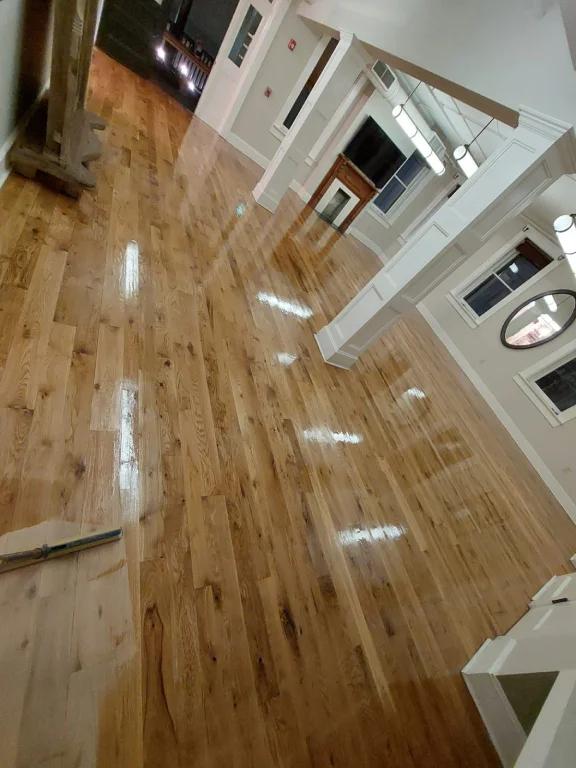
The same oak floor from above, across the whole room.
What you decide, what you buy
Nexus builds the room. You buy what goes into it. Labor only. You choose and buy the materials, with no markup from us. We tell you what to order and when.
You decide
- Floor type and product
- Plank direction and tile layout
- Base, shoe molding and transition style
- Which rooms, and in what order if you live in the house during the work
You buy, we install
- Flooring, with the waste allowance we give you
- Underlayment, vapor barrier or uncoupling membrane
- Leveling compound, backer board and thinset for tile
- Grout and sealer
- Transitions, base and shoe molding
- Delivery early enough for the flooring to acclimate, when the product calls for it
Labor only. All materials, equipment rentals and deliveries furnished by others (GC/Owner).
Questions about flooring
Tell us about the job.
Tell us what you are planning and where the house is. Iago will come out, measure, and send a written quote for the labor. It is free, and there is no obligation.
Call or text